


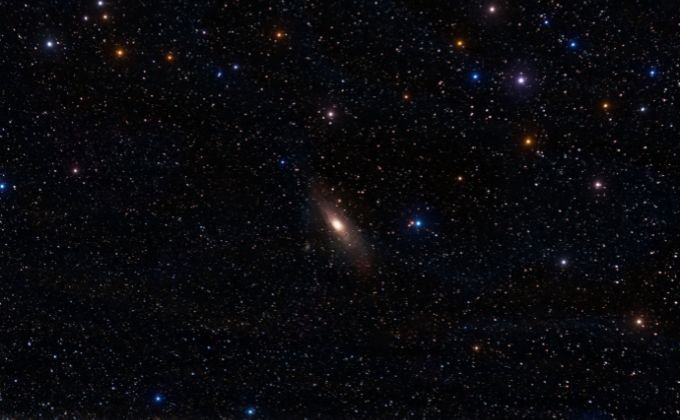

Stars have always played a central role in astronomy. Long before modern telescopes existed, humans used stars to navigate oceans, mark seasons, and tell stories about the sky. Today, Stars remain one of the most important subjects in astronomy because they help us understand how the universe works. By studying their types, the energy they produce, and their broader importance, we gain insight into everything from planetary systems to the origins of life itself.
What Stars Mean in Astronomy
In astronomy, stars are not just points of light. They are physical objects with mass, temperature, motion, and life cycles. Each star acts as a laboratory where extreme conditions reveal how matter and energy behave. Because stars are so bright, they can be observed across vast distances, making them essential tools for exploring deep space.
Astronomers rely on stars to measure distances, map galaxies, and study the history of the universe. Without stars, much of cosmic science would be impossible.
The Main Types of Stars
Stars come in many varieties, and astronomers classify them based on temperature, size, and brightness. One common system groups stars by their color, which reflects how hot they are. Blue stars are extremely hot, white and yellow stars fall in the middle, and red stars are cooler.
Another important distinction is size. Some stars are similar to our Sun, while others are much larger or far smaller. Giant stars can be hundreds of times bigger than the Sun, while dwarf stars are compact and faint. These differences affect how long stars live and how much energy they produce.
Binary and Multiple Star Systems
Not all stars exist alone. Many are part of binary or multiple star systems, where two or more stars orbit each other. These systems are important in astronomy because they allow scientists to measure stellar masses and understand gravitational interactions.
Binary stars can exchange material, influence each other’s evolution, and create dramatic cosmic events. Studying these systems helps astronomers refine theories about star formation and development.
How Stars Produce Energy
The energy produced by stars comes from nuclear fusion. Deep in a star’s core, immense pressure and temperature force hydrogen atoms to combine and form helium. This process releases enormous amounts of energy, which travels outward as light and heat.
This energy balances gravity, preventing the star from collapsing. As long as fusion continues, a star remains stable. The rate at which energy is produced determines how bright and how hot a star becomes.
Why Stellar Energy Matters
Stellar energy shapes the environment around a star. It warms planets, drives atmospheric processes, and can even influence the potential for life. In our solar system, the Sun’s energy supports ecosystems and climate on Earth.
On a larger scale, stellar energy affects the structure of galaxies. Bright, young stars can trigger new star formation or push gas away, influencing how galaxies evolve over time.
Stars as Markers of Time and Distance
Stars serve as cosmic clocks and measuring tools. By studying a star’s brightness and color, astronomers can estimate its age. Groups of stars within clusters often form at the same time, allowing scientists to track stellar evolution.
Stars are also used to measure distance. Certain types of stars have predictable brightness, making them reliable reference points. These measurements help map the size and expansion of the universe.
The Celestial Importance of Stars
Stars are central to the structure of the cosmos. They gather into galaxies, form planetary systems, and influence cosmic chemistry. Heavy elements such as carbon, oxygen, and iron are created inside stars and spread through space when stars die.
This recycling process enriches the universe and makes planets and life possible. Every atom in our bodies was once forged in a star, highlighting the deep connection between humans and the cosmos.
Stars and Human Understanding of the Universe
Throughout history, stars have guided scientific discovery. Observing their motion helped shape early models of the solar system. Modern astronomy continues this tradition by using stars to test theories about gravity, matter, and energy.
Stars also inspire curiosity and imagination. They remind us that the universe is vast, dynamic, and interconnected, encouraging exploration and learning across generations.
How Astronomy Continues to Study Stars
With advanced telescopes and instruments, astronomers can now study stars in remarkable detail. They analyze starlight to determine composition, motion, and magnetic activity. Observations across different wavelengths reveal hidden features that deepen our understanding.
Amateur astronomers also play a role by tracking variable stars and observing changes in brightness. This shared effort makes the study of stars a collaborative and evolving field.
Conclusion: Stars at the Heart of Astronomy
Stars are at the heart of astronomy. Their types reveal diversity, their energy powers cosmic systems, and their importance shapes the universe itself. By studying stars, astronomers unlock the story of creation, evolution, and connection across space.
Understanding stars is more than learning about distant objects. It is about understanding the universe and our place within it. Through stars, astronomy continues to illuminate the mysteries of the cosmos and inspire a deeper appreciation for the night sky.